
August 3, 2026
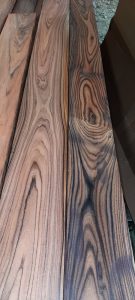
Some boards look good in the rack and disappoint on the bench. Bolivian rosewood lumber usually does the opposite. It may seem understated at first glance compared to louder exotics, but once it is milled and finished, the color depth, density, and clean natural figure make it a serious material for high-end work.
For cabinetmakers, furniture builders, flooring specialists, and experienced DIY woodworkers, this is a species that rewards careful planning. It is not the right choice for every project. It is heavy, hard, and can be demanding on tools. But when the application calls for strength, wear resistance, and a polished finished look, Bolivian rosewood earns its place.
Bolivian rosewood lumber is valued for its combination of beauty and performance. The heartwood typically ranges from medium brown to deeper reddish brown, often with darker striping or subtle variation that becomes more pronounced under finish. Depending on the board, you may also see a fine, uniform texture or more dramatic grain movement that gives the finished piece a custom look without feeling busy.
Despite the name, buyers should think of it in practical terms rather than romantic ones. This is a dense tropical hardwood chosen because it holds up well, machines into crisp profiles when prepared correctly, and delivers a refined appearance in finished interiors. It is especially appealing when the goal is a darker, richer wood that can handle traffic or repeated use.
That said, appearance can vary from board to board. Some lots lean warmer and more red. Others are more chocolate brown with less visible contrast. For that reason, hand selection matters, especially when you are building a run of cabinets, a tabletop, stair parts, or flooring where consistency across multiple boards matters.
This is a strong choice for flooring, furniture, cabinetry, accent millwork, stair components, and specialty trim. In those settings, its hardness and density become an advantage rather than a burden. It resists wear well, and it has the kind of visual weight that helps a finished project feel substantial.
For flooring, it performs well in spaces where durability matters, but proper acclimation and moisture control are not optional. Dense species can react slowly, which means they need enough time to adjust before installation. If that step gets rushed, movement after install can turn a premium floor into a callback.
In cabinetry and furniture, Bolivian rosewood works best when the design respects the wood. Large slab-like surfaces, door frames, exposed legs, tops, and visible rails all benefit from its natural color and mass. It can also be used as a contrasting element with lighter domestic hardwoods if you want a piece that feels custom without becoming overly ornate.
For smaller decorative items, it can be excellent, but cost and weight should be part of the decision. There are cases where another hardwood may deliver the same function at a lower price or with easier machining. That is why species selection should always start with the project, not just the name.
Bolivian rosewood is not a forgiving wood if your tooling is dull or your process is rushed. It is hard and heavy, and that affects every stage of the job. Ripping, surfacing, routing, boring, and sanding all go better when cutters are sharp and feed rates are controlled.
Machining quality can be very good, but this species does best with attention to detail. Tear-out is possible where grain shifts. Burning can happen if blades are dirty or feed speed lags. Pre-drilling is often wise for fasteners, and glue surfaces should be prepared carefully because dense woods can be less tolerant of sloppy prep.
Finishing is one of its strengths. When sanded properly, it can develop a smooth, rich surface with strong depth and warmth. Oils and film finishes can both produce attractive results, but testing matters. Some finish systems will emphasize red tones, while others pull out darker brown character. If you are matching an existing interior or trying to maintain consistency across a larger installation, sample boards are worth the time.
A lot of problems blamed on the species are really drying problems. With a dense hardwood like this, moisture content is a real quality issue, not a technical footnote. Boards that are not dried properly can move unpredictably, machine poorly, and create trouble after installation.
Kiln-dried stock gives buyers a better starting point, especially for interior work where stability matters. Furniture parts, cabinet components, flooring, and tops all depend on lumber that has been dried with care and brought to an appropriate moisture content for the intended use. That is one reason serious buyers often prefer to work with a supplier that has direct control over milling and drying rather than depending on mixed inventory from unknown sources.
Even with properly dried lumber, acclimation on site still matters. A board can leave the rack in excellent condition and still cause trouble if it goes straight into a project without adjusting to the shop or jobsite environment. This is particularly true in North Carolina, where humidity swings can affect wood movement across seasons.
The right Bolivian rosewood boards depend on what you are building. For a tabletop or wide panel glue-up, color continuity and grain direction should be the priority. For cabinet parts, straightness, machining potential, and consistency matter just as much as figure. For flooring, milling tolerance and moisture condition are central.
Look closely at board length, width, and defect placement rather than focusing only on species name. A beautiful board with dramatic variation may be perfect for a statement piece and wrong for a uniform commercial install. Likewise, a straighter, quieter board may be more valuable in a production setting than one with more visual movement.
It also helps to think ahead about waste. Dense exotic hardwoods are too valuable to buy casually. If the project requires specific grain orientation, exact color matching, or long clear lengths, say that up front. Good selection at the lumber stage saves time and material later.
Bolivian rosewood is not a budget species, and it should not be evaluated like one. The value is in appearance, hardness, wear resistance, and the finished impression it creates. If a project calls for premium material that will be seen, touched, and used for years, the price can make sense.
Still, there are trade-offs. It weighs more than many domestic alternatives, it can be tougher on cutters, and labor can increase if your shop setup is not ready for dense hardwoods. If the piece will be painted, heavily stained, or installed where the wood itself is not a feature, there may be a better option.
The smartest buyers compare material cost with project purpose. If the job is a custom conference table, high-end built-in, stair tread package, or durable floor with visual presence, Bolivian rosewood may be exactly right. If the goal is simply to check a hardwood box, it may be more wood than the job needs.
When you are buying specialty hardwoods, the supplier matters almost as much as the species. A board that looks good in a photo is not the same as a board that has been milled properly, dried properly, and stored with care. Access to real inventory, knowledgeable selection help, and clear information about moisture and condition makes a difference.
For buyers in the Triad who need quality material for furniture, cabinetry, flooring, or custom interior work, GPS Hardwoods offers the advantage of direct oversight from milling through drying. That matters when you are choosing a dense species like this and need confidence in how it will perform once it leaves the rack.
Bolivian rosewood is a wood for serious projects. It asks more from your tools, your planning, and your material selection, but it gives something back that cheaper boards cannot fake. If you want a hardwood with weight, character, and long-term performance, this is one worth seeing in person. We’ll show you the grain. If you have questions about current stock or the right fit for your build, contact GPS Hardwoods at 336-512-1121 or GPShardwoods@gmail.com.